
Why Earn Your Bachelor's in Medical Humanities - Health Humanities Degree at Saint Leo University?
The Major with a Heart
Where Health Meets Humanity
Healthcare is about more than medicine. It is about people.
Through interdisciplinary coursework, faculty mentorship, service learning, and individualized academic pathways, Saint Leo University's Medical Humanities - Health Humanities track prepares students for careers and graduate study in healthcare, allied health, administration, education, advocacy, wellness, and the helping professions.
Students learn to understand health, illness, disability, caregiving, mental health, ethics, communication, and wellness through the perspectives of psychology, sociology, philosophy, literature, history, religion, and the arts.
Why Medical Humanities at Saint Leo?
Students combine healthcare interests with communication, ethics, psychology, culture, history, religion, and the arts to better understand the human experience of health and illness.
This program is offered:
Campus
Education Center
Online
The Medical Humanities major is designed to prepare students to succeed in diverse health-related fields and/or graduate study. The interdisciplinary degree integrates the humanities with science-focused education, emphasizing disciplines such as philosophy, the arts, literature, history, and the social sciences for a more empathetic and holistic understanding of health and illness. The interdisciplinary of the degree allows students to create their own focus of study. In each path of study, students will analyze issues of health, wellness, and illness through an interdisciplinary lens and explore the historical, philosophical, artistic, and religious/spiritual backgrounds of the medical sciences. Additionally, students will synthesize the ethical and social features of health, illness, and medicine.
Est. Time to Complete:
4 Years
Credit Hours:
Bachelor's in Medical Humanities - Health Humanities Program Details
In addition to University Explorations courses, all students majoring in the Medical Humanities will take a 21-semester hour core. This concentration allows students to focus their studies more deeply in the humanities with the Health Humanities track consisting of 18-semester hour credits. This option provides flexibility to students to craft a curriculum that fits their interests while still providing essential instruction in the Medical Humanities. Additionally, students must take enough general elective credit hours to fulfill total hours required for degree completion in addition to the completion of University Exploration courses. Prerequisite courses will also be taken as needed.
| Human-Centered Healthcare | Flexible Pathways | Experiential Learning |
|---|---|---|
|

|
|
|
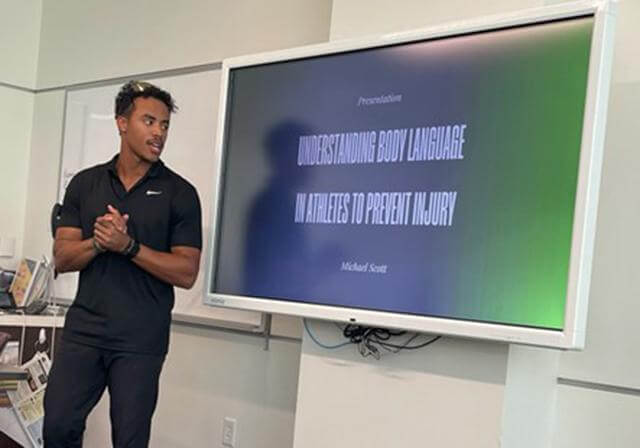
Former Saint Leo baseball player Michael Scott presented research exploring how body language can help identify injuries in student-athletes who may be reluctant to report pain or physical limitations out of concern for playing time, team standing, or scholarship opportunities. Now pursuing graduate study at Florida Southern College , where he continues to compete in baseball, Michael's work asks: How can we better understand the people behind the symptoms? |
Valedictorian Kristina Arwady graduated from Saint Leo in 2025 with a double major in Medical Humanities and Management. She received the Dean's Award for Excellence at the 2025 Academic Excellence Awards, competed on the soccer team, and served as SAAC president. She earned her MBA from Saint Leo and is now studying at the University of Central Florida College of Medicine . Soon she will be Dr. Arwady. |
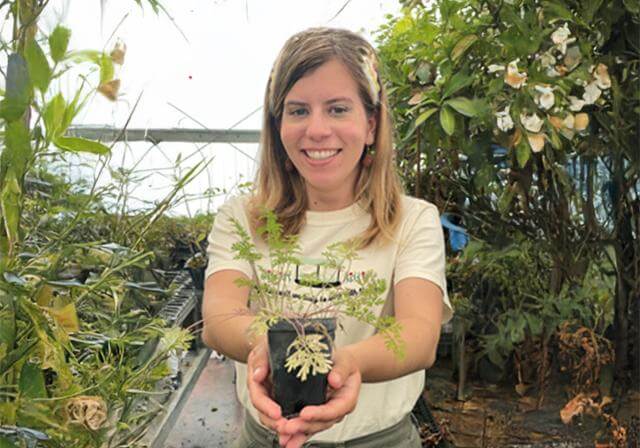
For Caroline Magill, experiential learning meant turning a greenhouse internship into original scholarship. Combining coursework in Ecology, Botany, Medicinal Botany, and Nature Writing, Caroline developed Channeling Your Fruits of the Spirit , a botanical guide exploring the healing properties of plants and their connection to wellness and spirituality. Her Honors Capstone continues this work by examining the role of nature in human health and well-being. |
Why Study Medical Humanities?
The Health Humanities track combines the strengths of the humanities, social sciences, and healthcare-related studies to prepare students for meaningful careers that improve the lives of others. Through an interdisciplinary curriculum, students develop critical thinking, communication, leadership, and problem-solving skills while gaining a deeper understanding of health and the human experience.
How do people experience illness and recovery? |
How do culture and identity affect health outcomes? |
What role do ethics play in healthcare decisions? |
What factors contribute to wellness and quality of life? |
What Will I Study?
| Program Core Requirements | Flexible Coursework |
|---|---|
|
Students also choose courses across four categories that provide a broad understanding of humanistic healthcare and wellness while leaving room to select classes that fit their interests and goals.
|
Research That Matters
Medical Humanities students complete original capstone projects and research exploring healthcare, disability, ethics, wellness, mental health, spirituality, education, environmental stewardship, and community well-being. Recent student projects include:
-
![Research That Matters]()
-
Recent student projects include:
- Kadie Diem, Supporting Hearing Loss at All Ages
- Kendal Bos, Using Instagram for Autoimmune Health
- Isabella Polanco, Educating Students About Disabilities
- Valerie Eulett, Autonomy of the Mentally Disabled

Career Opportunities
The Medical Humanities major focuses on preparing students mainly for health-related fields, but offers students a choice of tracks for further specialization. The Health Humanities track supports careers and/or graduate work in other fields such as psychology, social work, public health policy and education, medical writing and illustration, occupational therapies, and an array of additional health-related fields. As this track will require less major coursework than the Pre-Med track, students in this track will have more opportunities for minors that will help to focus their ultimate career goals.
Where Our Graduates Go
| Name | Program/Position | Institution/Employer |
|---|---|---|
| Dana Mumaw | M.S. Occupational Therapy | Florida Gulf Coast University |
| Kendal Bos | Diagnostic Medical Sonography | AdventHealth University |
| Janiya DeVaughn | M.S. Psychology: Applied Behavior Analysis | National University |
| Xanah Sproul | M.A. Health Administration | University of North Florida |
| Javier Todd | Medical Scribe | Bravera Health |
| Rodney Robinson | Patient Account Analyst | Encompass Health |
| Caroline Magill | Graduate Study in Educational Leadership | |
| Morgan Walker | Science Educator | Dayspring Academy |
| Mary Margaret Worhacz | Campus Minister | Saint Leo University |
Career Pathways
|
Allied Health
|
Healthcare Administration
|
Psychology & Behavioral Health
|
|
Public Health & Community Health
|
Education
|
Advocacy & Human Services
|
Medical Humanities Beyond the Classroom
-
![Medical Humanities Beyond the Classroom]()
-
The Medical Humanities Club gives students opportunities to connect classroom learning with service, advocacy, leadership, and community engagement.
Students participate in awareness events, host educational activities, connect with healthcare professionals, and build relationships with peers who share a passion for health, wellness, and helping others.

Meet our Faculty
-
![Missing Image 362x440]()
Dr. Allyson Marino, Ph.D.
-
![Missing Image 362x440]()
Dr. Elisabeth Aiken, Ph.D.
-
![Headshot of Karen Hannel]()
Dr. Karen Hannel, Ph.D.


Accreditation
Saint Leo University is accredited by the Southern Association of Colleges and Schools Commission on Colleges to award associate, bachelor’s, master’s, specialist, and doctoral degrees.