Saint Leo University, LJM Maritime Academy Sign Agreement to Expand Maritime Education and Research
Collaboration strengthens efforts to advance educational access, industry readiness, and regional workforce development.

Collaboration strengthens efforts to advance educational access, industry readiness, and regional workforce development.
Dr. Jim Burkee, Saint Leo University president, and Dr. Richard Wiefelspuett, LJM Maritime Academy president, have signed a memorandum of understanding to create new academic and research partnerships aimed at advancing maritime education and workforce development. This agreement sets the stage for collaboration on programs and projects that address the evolving needs of the global maritime industry.
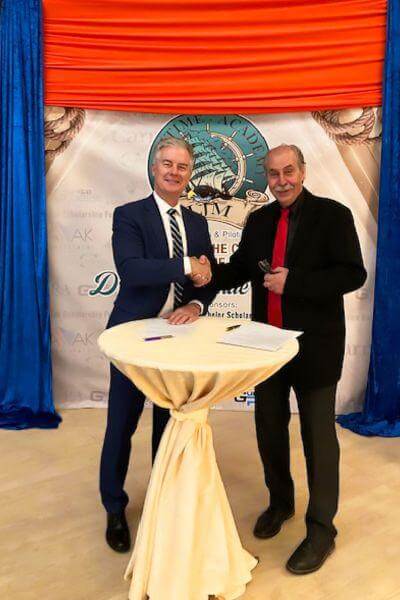
The Bahamas has a long and distinguished history in the maritime sector. Strategically located between several continents and along major global transshipment lanes, the nation is home to one of the world’s largest ship registries, with more than 1,400 vessels flying the Bahamian flag. This reflects the country’s strong regulatory framework and deep maritime expertise.
To retain the competitive advantages of the Bahamian maritime sector, the LJM Maritime Academy is positioning itself to meet global economic and technological shifts. “Technology is constantly evolving, with new fuel types such as liquefied natural gas and greater emphasis on innovation,” Wiefelspuett said. “Building a globally competitive workforce is critical in our industry.”
“Saint Leo is committed to fostering international partnerships that expand educational access and innovation,” Burkee said. “Through this agreement with LJM Maritime Academy, we aim to create pathways for Caribbean students to gain valuable expertise and credentials that strengthen both their professional growth and their communities.”
Saint Leo University serves more than 11,000 students worldwide, including approximately 100 from The Bahamas, through on-campus, online, and hybrid formats. With more than 55 undergraduate and graduate degrees, the university equips students with the skills needed for the maritime industry’s future, in areas such as cybersecurity, information technology, global business, and leadership.
Next steps under the memorandum include developing a joint action plan to identify specific initiatives such as academic exchanges, funded research projects, and technology-focused training programs.